




Industries We Serve
Multi-Outlet Chains
Indian F&B Consulting
Multi-outlet restaurant chains in India face the dual challenge of maintaining consistent food quality and operational efficiency across locations. Rising ingredient costs, inconsistent service, fragmented kitchen workflows, and lack of digital visibility can impact profitability and brand reputation. BudgetBytes helps multi-outlet QSR chains, casual dining chains, and franchise-based restaurants establish standardised operational SOPs, optimise menus, control costs, enhance online presence, and improve customer experience across all outlets.
We work with restaurant chains, cloud kitchen networks, and franchise-based operations across Tier 1, Tier 2, and Tier 3 cities in India. Our focus is on increasing footfall, improving table turnover, streamlining kitchen workflows, optimising menu contribution margins, and creating repeatable systems that enable profitable multi-outlet expansion.
Leveraging expertise in menu engineering, recipe standardisation, kitchen workflow optimisation, cost control, digital marketing, loyalty programs, aggregator management, and data-driven insights, we help restaurant chains grow sustainably while maintaining brand consistency across all outlets.
Multi-outlet restaurant chains must balance quality, speed, and operational consistency to grow efficiently. Without strong SOPs, staff training, menu strategy, and data-driven operational control, scaling becomes risky and unprofitable.
Key challenges faced by multi-outlet chains include:
Fluctuating ingredient prices, inconsistent portioning, and weak vendor contracts reduce margins. Smart menu engineering and cost control strategies are essential to maintain profitability across outlets.
Variations in taste, presentation, and service can harm brand reputation. SOPs, recipe standardisation, and staff training help maintain consistency in multi-outlet operations.
Poorly designed kitchen layouts, prep cycles, and table service processes lead to long wait times and reduce customer satisfaction. Optimised workflows improve speed and service quality.
Without local SEO, social media campaigns, and aggregator presence, multi-outlet chains miss out on online orders and brand recognition. Digital marketing boosts awareness and repeat orders.
Menus with too many low-margin or low-selling items reduce profitability. Menu engineering ensures optimal item mix, higher contribution margins, and simplified preparation across all outlets.
High turnover, especially in multi-outlet chains, disrupts service and operations. Structured training, clear role definitions, and performance monitoring improve staff retention and efficiency.
Without operational SOPs, standardised training, and data dashboards, expansion to multiple locations or franchises becomes inconsistent and risky.
Without consistent customer experiences, loyalty programs, and engagement initiatives, multi-outlet chains struggle to drive repeat visits and sustain revenue growth.
BudgetBytes helps multi-outlet restaurant chains and QSR chains across India optimize operations, standardize menus, reduce food cost, and enhance profitability.
Our consulting supports multi-unit expansion, menu engineering, operational SOP implementation, and digital marketing for sustained growth.
Optimised staffing and promotions boost customer traffic chain-wide effectively.
Standardised recipes and SOPs maintain taste and service across locations.
Portion control and menu engineering improve profitability for all outlets.
SEO, social media campaigns, and aggregator optimisation grow orders online.
Operational audits and process improvements reduce prep time and errors.
Engagement campaigns and reward programs increase repeat visits chain-wide.
Dashboards and SOPs enable smooth growth to new outlets or franchise models.
Branding, packaging, and ambiance create a consistent experience everywhere.
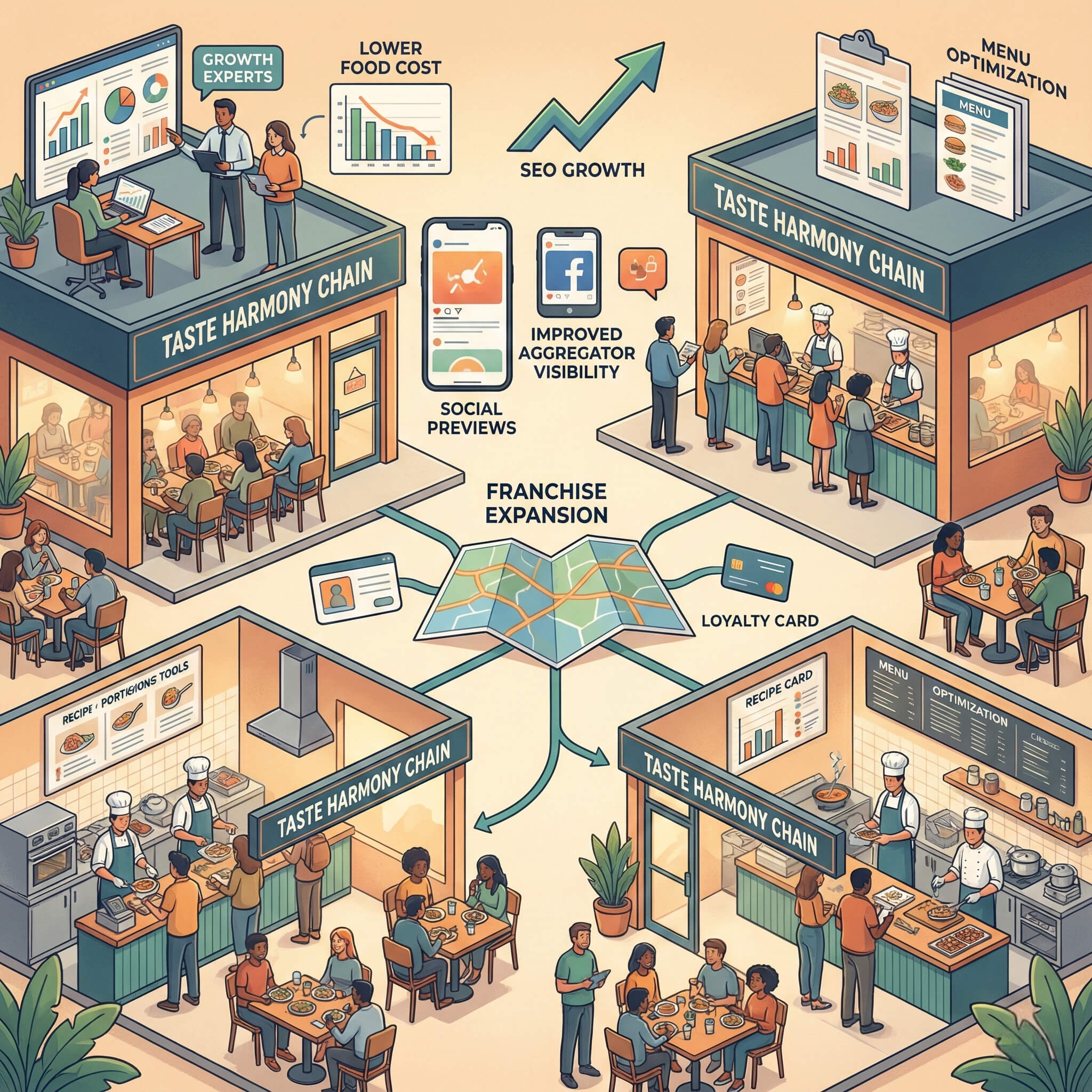
Smart Systems. Lower Costs. Scalable Multi-Outlet Growth.
Multi-outlet chains, casual dining brands, cafés, and QSR networks in India face challenges like rising food costs, inconsistent quality, operational inefficiencies, low footfall, and weak online presence. BudgetBytes helps restaurant chains improve menu engineering, optimise kitchen workflow, standardise food quality, control costs, and increase table turnover. Our consulting approach boosts digital marketing, aggregator platform optimisation, customer experience, and operational scalability, making your multi-outlet restaurant chain profitable, data-driven, and future-ready.
Multi-Outlet Chains & QSR Consulting India
Multi-outlet chains are restaurant brands operating multiple locations across cities, regions, or nationally. Unlike standalone outlets, they require standardized operations, centralized supply chain, staff training, and consistent customer experience. Compared to QSRs, they focus on scale, systemized profitability, brand consistency, and efficient multi-city growth strategies.
Revenue and efficiency grow through menu engineering, food cost control, centralized procurement, workflow standardization, employee training, and digital ordering integration. Marketing campaigns, loyalty programs, and consistent online aggregator presence (Swiggy, Zomato, ONDC) drive repeat business, higher average ticket value, and overall profitability.
BudgetBytes helps chains with standardized SOPs, centralized recipe and menu control, kitchen optimization, staff training modules, marketing strategy, loyalty programs, online ordering integration, and aggregator optimization. This ensures consistent quality, faster prep times, better ratings, and scalable operations across multiple locations.
Chains face rising food costs, inconsistent quality across outlets, high staff turnover, supply chain inefficiencies, low aggregator visibility, process misalignment, slow delivery prep, and uneven marketing execution. Tier 2 and Tier 3 cities require hyperlocal strategies to match urban growth with regional demand.
Chains improve ratings by maintaining consistent food quality, efficient service, clean outlets, proactive feedback response, and trained staff. Leveraging aggregator platforms like Zomato, Swiggy, and Google reviews ensures reputation management and repeat customer engagement across all locations.
Effective strategies include standardized menus with high-margin items, regional adaptations, seasonal specials, combo offers, and beverage add-ons. Optimized recipes reduce prep time, maintain quality across outlets, improve delivery performance, and maximize revenue while controlling ingredient costs and waste.
Operational waste reduces with inventory management, portion standardization, predictive demand planning, workflow automation, and staff training. BudgetBytes implements waste-tracking systems and vendor management to increase efficiency and lower costs across multiple locations.
Technology solutions like POS automation, kitchen display systems, analytics dashboards, and centralized inventory platforms streamline operations, reduce errors, improve prep times, and provide actionable insights for multi-location management and revenue growth.
Yes. With standardized SOPs, staff training modules, central recipe control, technology systems, and marketing strategy, chains can scale efficiently across urban, semi-urban, and Tier 2/3 Indian cities. BudgetBytes ensures brand consistency and operational excellence across all new locations.
Multi-outlet chains typically see improvements in operational efficiency, prep time, food cost, online orders, and customer ratings within 4–8 weeks. Continuous monitoring, menu optimization, and workflow improvements ensure sustainable growth and consistent profitability.